Project Description
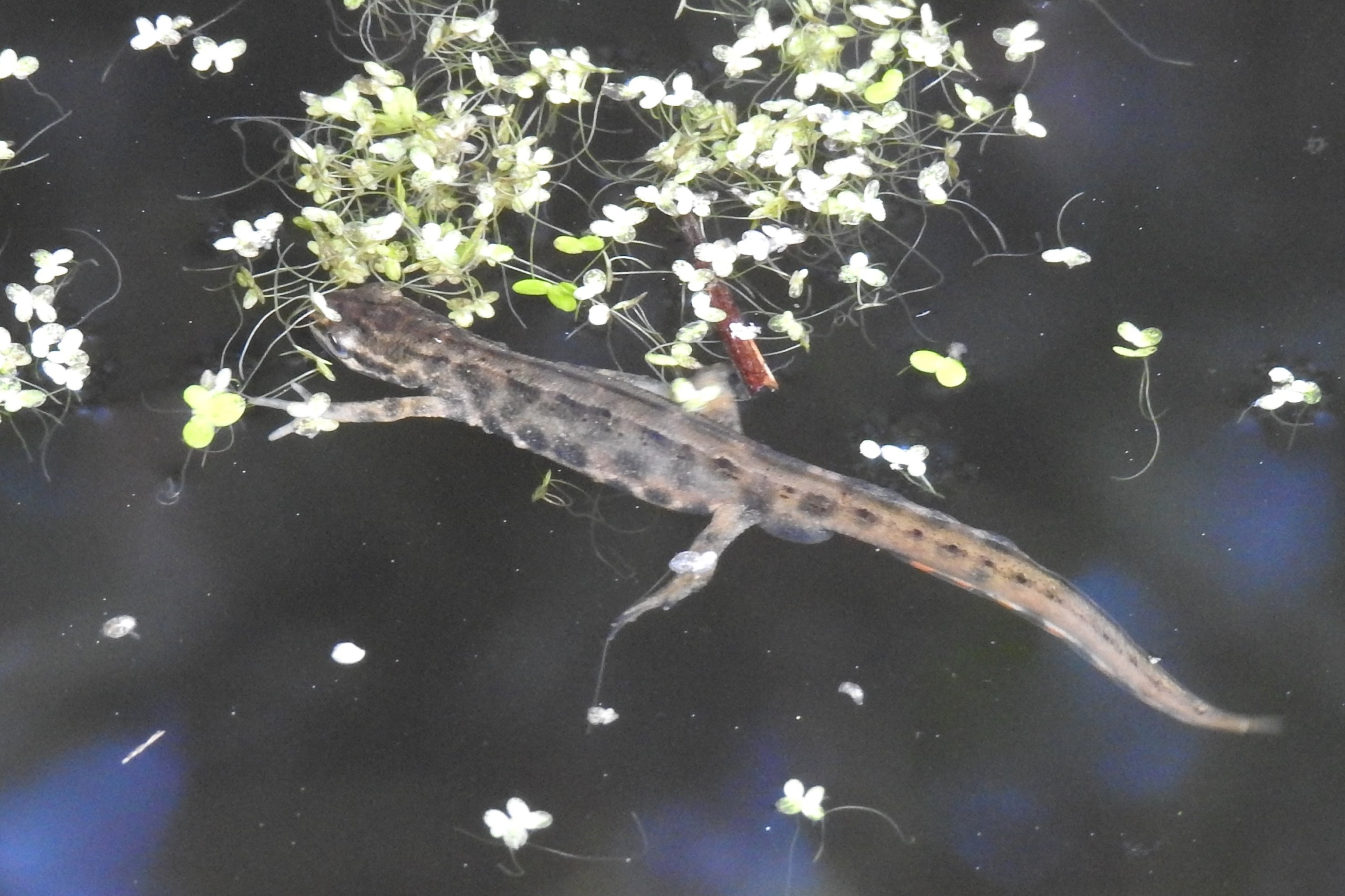
Smooth Newt (copyright Justin Ivory)
We all know that one of the best things we can do for biodiversity in our gardens is to put in a pond. You will be surprised by the variety of wonderful wildlife that will take advantage of it. And to prove this point I spent the last few weeks checking out some garden ponds within my 5km.
Fascinated by newts since a child, I was delighted to find plenty of Smooth Newt (Lissotriton vulgaris) activity in several ponds. Whenever I see them swimming, I can’t help thinking of them as mini-Godzillas……and that is meant as a compliment! I guess to the many invertebrates on their menu, which includes the tadpoles of frogs, they are.
We only have 3 amphibian species in Ireland, and we get 2 of them in here in Wicklow, the Common Frog (Rana temporaria) and the Smooth Newt (Lissotriton vulgaris). The Smooth Newt is the only member of the Urodela (the tailed amphibians) found in Ireland.
During the breeding season, which typically lasts from late February to June, the males have a wavy crest along their backs. And just like John Travolta in Saturday Night Fever (blank, puzzled looks at this juncture from those under 45), they try to impress females with their best dance moves. After mating the female lays the eggs (up to 300 of them) individually, wrapping each of them in the leaves of an aquatic plant, as opposed to the big clumps of spawn of the Common Frog.
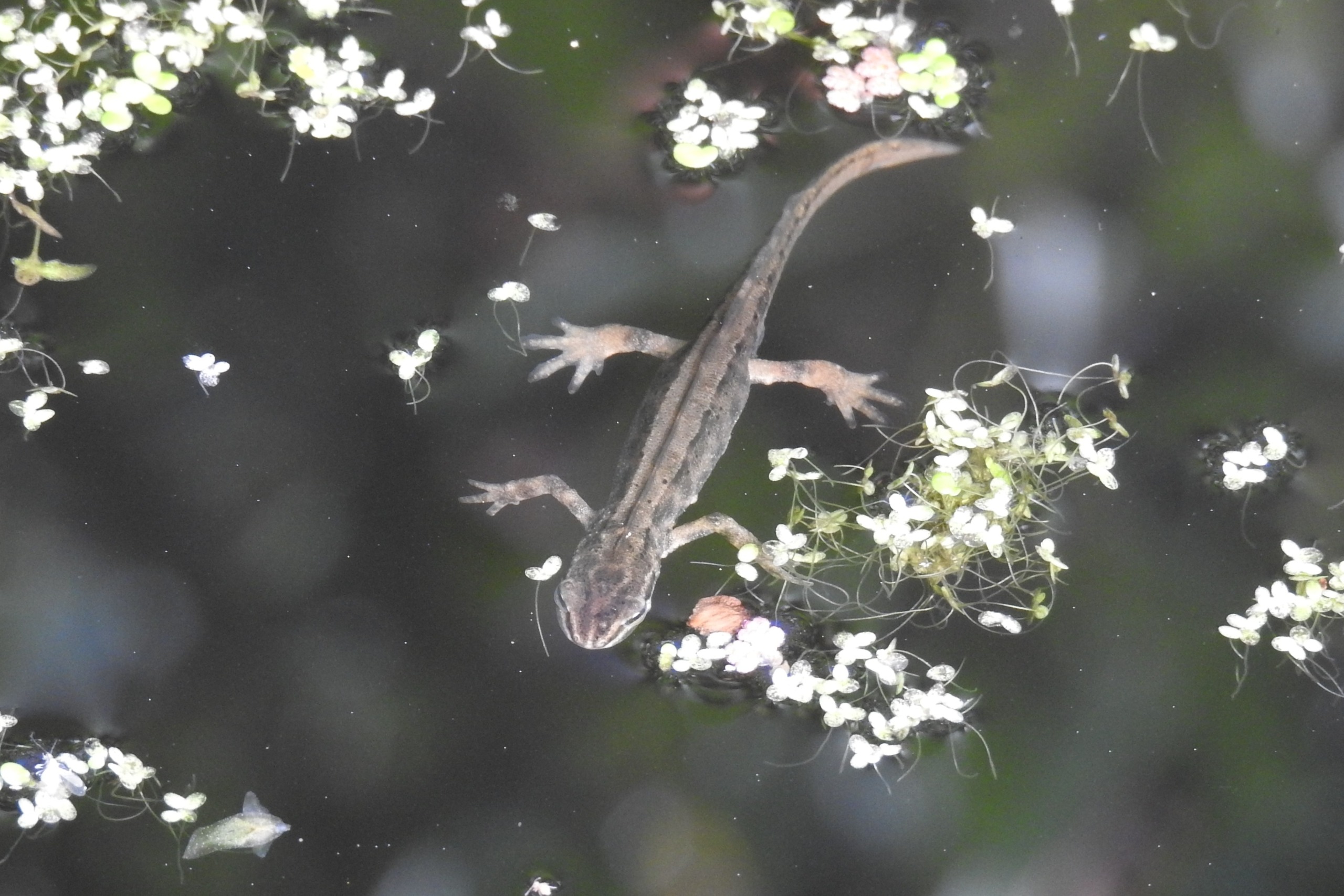
Smooth Newt (copyright Justin Ivory)
About 3 to 4 weeks later the newt tadpoles emerge. Unlike frog and toad tadpoles, newt larvae develop their front legs first, then their back legs. Once they have absorbed their gills and left the water, they are known as ‘efts’. It takes 2 to 3 years for these efts to reach maturity. Adult Smooth Newts are typically about 10cm long.
In late summer both juveniles and adults leave the water and spend the rest of the year in terrestrial habitats such as long grass, woodland, marshes, and hedgerows. In winter they will hibernate among tree roots, in holes in walls and in log piles.
If you have a pond then keep an eye out for these intriguing creatures.