Project Description
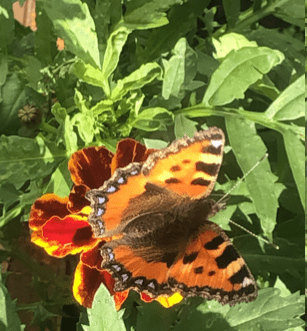
Our world has already changed so much over the last year, and despite there being so much heartache, sadness and confusion out there, there are a few things that I will take away from the last year and which I will be forever grateful for. More time at home with my dog, more walks during the day, starting a veggie patch (and supplying my husband and I with enough tomatoes to turn us red), putting up bird feeders in the garden and the enjoyment of watching my visitors fight over seeds and suet balls while I work, watching my veggie patch thrive and seeing the bees and butterflies (and the slugs and snails) enjoying my plants. What do you notice about all these things that have brought me so much joy during such dark times? The theme here is nature and biodiversity!
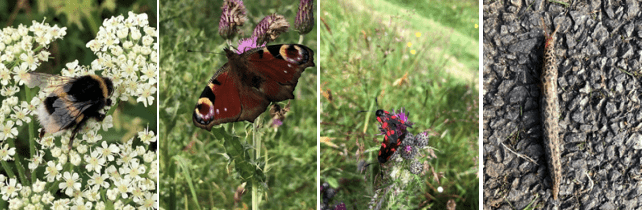
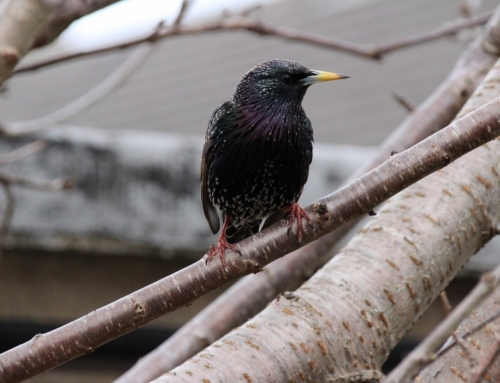
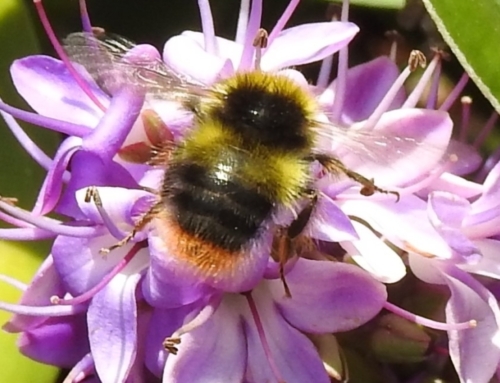
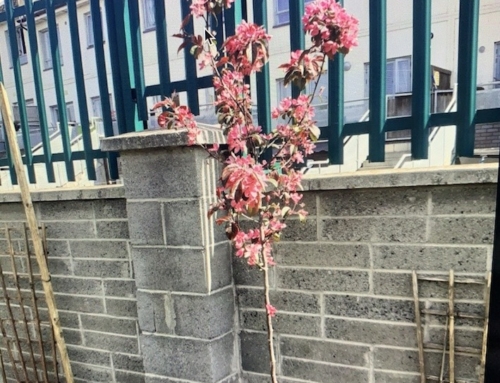
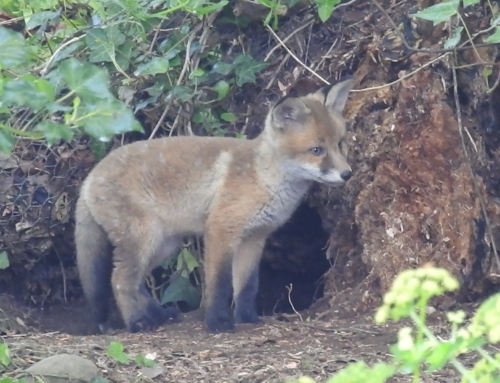
Some of the beautiful creatures spotted on my daily walks!
I’ve always been a nature lover, but in the last year with little else to do, I’ve really started to notice the plants and the creatures around me again. In the past it seems like I was always rushing, in a hurry to get home or to meet friends or to get to work.
I’m lucky enough to live in an area surrounded by green spaces at the foot of the Dublin Mountains. Talk to people who grew up here 20 years ago and they paint a very different picture. Despite all the green spaces, we are now also surrounded by blocks of flats, rows and rows of houses, shops and schools.
The road I live off is no longer a quiet farm road like it once was .When I sit back and try to imagine what things used to look like around here, I realise that it’s not just this little part of Ireland that has been transformed over the years. Urbanisation is happening everywhere. Green spaces are being replaced by blocks of flats and highways, the trees are being chopped down and birds, animals, bees and bugs’ homes are being destroyed, which would explain why their numbers are dropping so rapidly. Whilst we are busy providing homes for our ever growing population, we’re removing the homes of the things that give us life! This is going to cause serious problems for us going forward if we sit back and let this happen. Everyone has a part to play and everyone can play a part, no matter how small.
As part of my commitment to bringing diversity back into my garden and my surrounds, I’ve joined my local Residents Association and have been working with the environment and biodiversity team and encouraging our residents to get involved as much as possible and to bring nature back! In the last few months, we have been busy educating the community through our social media platforms as well as speaking to people about what we are doing whilst we are busy in the gardens.
· We’ve installed over 10 nesting boxes and insect hotels around our estate
· We’ve planted native trees and shrubs, which we hope will create a nature corridor
· We’ve planted wildflowers and bulbs to bring in a pop of colour and to attract bees and pollinators
· We’ve created wild areas where no mowing will take place and where wild flowers can do just that – go wild!
· We’ve planted pollinator friendly plants in our flower beds
There are lots of communities doing similar work and there are a ton of websites full of information on biodiversity! Google is your friend – get online and start learning. Join Facebook groups and free events. There is so much going on at the moment if you look for it. If you aren’t able to join a community and would prefer to work alone – that works just as well! Some of the things I started last year in my garden are easy to do – even if you are new to all things biodiversity and gardening. During spring and summer I let all the weeds around the edge of my lawn grow. The dandelions, daisies and other wild plants bring in so many creatures to the garden, and in fact they look pretty too.
If you have a spot in a corner of your garden that you aren’t using, why not turn this into a wild area? You can add some logs and rocks, an insect or bee hotel. Let it grow wild and see what happens! Pinterest is another great place for inspiration and if you have children (or if you’re just young at heart) you could perhaps turn your wild area in to a fairy or gnome garden or whatever tickles your fancy.
Last year I also bought two very cheap collapsible raised beds and planted a few plants. Marigolds, tomatoes, a variety of herbs and some mixed lettuce. The pride I felt being able to actually eat my own home grown food was indescribable – my plants became my children and I spent hours outside checking their growth, watering and caring for them. If you’ve never been a plant mother/father – you have got to try it out. You’ll be amazed at how many creatures you suddenly have visiting and if you are into photography then it can be really enjoyable trying to capture photos of the butterflies or bees whilst silently creeping up behind them to get your shot, unless of course you are lucky enough to have a real camera with a big zoom lens, then you don’t need to even move from your seat.
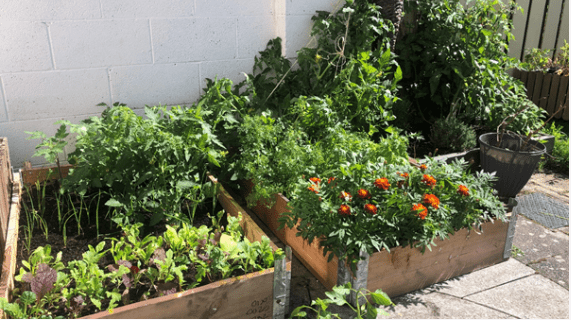
Prior to covid, I don’t actually recall ever seeing birds in my garden, bar the odd magpie perhaps trying to steal my dog’s food. I’m now the proud owner of 3 bird feeders and am delighted every time I notice a new bird. In the spring and summer last year I also had many beautiful visitors to my veggie patch and garden, some of which you will see pictured on the right.
Being told to stay home and limit our movements has been difficult for us – we are social creatures by nature. Our mental health has been affected drastically this last year, but getting outside and into nature and doing something for the planet and for yourself is guaranteed to improve your mood. I cannot recommend it enough. It’s like a (good) drug, and once you start learning, you won’t be able to stop.
JOIN ME! Let’s take a walk on the wild side and bring biodiversity back.
”Remember to look up at the stars and not down at your feet. Try to make sense of what you see and wonder about what makes the universe exist. Be curious, and however difficult it may seem, there is always something you can do and succeed at. It matters that you don’t just give up‘ – Steven Hawking
Photos credit © Julie Taylor